44 / Oct 19 – Oct 25, 2026 · 29 RELEASES
AI News Week 44, 2026
Video Agents Week. Coding agents started making and editing films: OpenFilm lets Claude Code or Codex build a film as web pages and edit it in a local studio, Nate Herk's Herk Edit Kit packages video-editing skills, CozyClay turns scripts into previs, and the ATAS code release keeps one persistent world behind multi-shot AI films. Video models got faster, with the FastVideo team's FastH3 Omni, a distilled MiniMax H3 with synchronised audio, reporting 5.6x to 11.9x lower latency, alongside world models from Tencent (Hy-Nomas), Viggle (JST-2) and Skyfall (SKY-001). In language models, Moonshot shipped Kimi K3.1 Pro, MiniMax released M3.1 Flash, Inception's Mercury 3 diffusion model reached 1,068 tokens per second and DeepSeek updated V4.1-Flash and open-sourced its DeepInfer engine. Anthropic opened Claude Duet, a proactive agent app, as a research preview on 21 October; Block's Dessa learned full-duplex conversation from recorded speech alone, and Bria's Fibo 2.0 Dev put image generation and editing in one 8B model.
Language Models (7)

Mercury 3
Inception · Diffusion LLM
Inception's third-generation diffusion language model, announced 19 October. It is more than 40 times larger in total parameters than Mercury 1, runs at 1,068 tokens per second on NVIDIA GPUs and has a 1M-token context, up from 260K for Mercury 2.5. Inception says it matches or beats GPT-6 Luna and Claude Haiku 5.5 while running 4-8x faster, and completed 50% of 50 live Mind2Web tasks in a partner test, all self-reported. Pricing is $0.20 per million input and $0.70 per million output tokens, half that at launch, with cached input 90% off. It is on the Inception API, OpenRouter, Baseten and Vercel. Follows Mercury Chat covered in week 9.
DeepSeek-V4.1-Flash-1017
DeepSeek · Open-Weight LLM
A minor update to DeepSeek-V4.1-Flash, uploaded to Hugging Face on 17 October with MIT-licensed FP8 weights and a 1M-token context. DeepSeek reports gains in reasoning, coding, agent and vision tasks with shorter outputs: 42.3 on Terminal-Bench 4.0 against 31.2 for the previous Flash, 77.0 on DeepSWE v1.1 and 42.6 on HLE without tools, all self-reported. There is no Jinja chat template; a Python encoding reference and the deepseek-recipe Rust libraries handle prompts. The card recommends temperature 1.0 and max tokens of 256K or more. 2,814 likes. Follows DeepSeek-V4.1-Flash covered in week 37.
Kimi K3.1 Pro
Moonshot AI · Open-Weight Frontier
The first model in Moonshot's K3.1 series, a post-trained version of Kimi K3 with larger reinforcement-learning compute, a 1M-token context and a Highspeed variant 2-3x faster. Moonshot reports 65.7% on Terminal-Bench 4.0 against 58.2% for GPT-6 Astra and 66.4% for Claude Opus 5.5, 92.7% on BenchCAD with tools and 64.4 on OfficeQA Pro v2, all self-reported. Its internal hallucination rate fell from 23.4% to 8.3%. For the open-weight release it removed cyber-related training data, cutting an internal exploit benchmark score from 90.5% to 81.0%. It is live on Kimi.ai, Kimi Work, Kimi Code and the API; weights are due by 4 November. Follows Kimi K3 (weights) covered in week 31.

Carbon-X
Hugging Face (HuggingFaceBio) · DNA Language Model
An open 14.8B-parameter language model from Hugging Face's bio team, trained jointly on DNA and English text and built on Qwen3-14B. You paste raw DNA into a chat and it predicts whether variants are benign or pathogenic, finds regulatory regions, classifies organisms and continues sequences, with explanations. DNA is tokenized as 6-mers in the same token stream as text; context is 40,960 tokens and training used 302B tokens plus SFT and RL. Across five DNA benchmarks it averages 66.7% (self-reported), 27 points above Qwen3-14B and close to GPT-6.1 Sol at 67.5%, at far lower cost. Apache 2.0; fits on one 80 GB GPU.
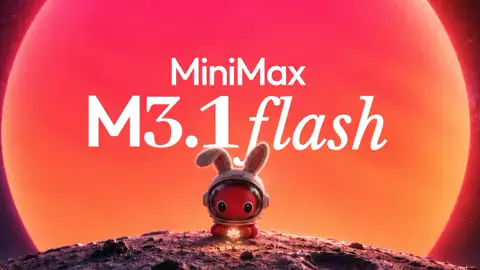
MiniMax M3.1 Flash
MiniMax · Fast Agent LLM
MiniMax's new Flash-tier model, released 19 October; an early version ran anonymously as "Space Bunny" and processed over 200 trillion tokens. MiniMax reports 73.7% on DeepSWE v1.1, 61.7 on OSWorld V2, 29.6 on Agents' Last Exam, 76.2 on BankerToolBench and 82% on CyberGym (self-reported). Sparser inference gives output speeds of 200+ tokens per second, with a median above 170. Pricing is $0.15 per million input tokens, $0.60 output and $0.015 cached input, and MiniMax says agentic task cost is 70% below its predecessor. It is available through the MiniMax API, M Plan and MiniMax Code; weights and a Pro model come later. Follows MiniMax M3 covered in week 23.
MemT-1.0-Nano
MemTensor · Memory LLM
The smaller model in MemTensor's MemT-1.0 family, which builds persistent memory into the model itself. A Native Memory Block next to attention keeps a fixed-size memory state across turns, so past conversation can be dropped from the context; MemTensor says this cuts storage about 66x versus a full KV cache at 128K history. Nano is fine-tuned from Qwen3.6-35B-A3B with 36B total and 3B active parameters, 451M trainable memory parameters and a 10M memory state, trained on 34B tokens. Weights are Apache 2.0 on Hugging Face (uploaded 15 October). On 11 memory benchmarks it ranks second among parametric-memory methods, behind MemT-1.0-Flash (self-reported).
Ling-3.0-flash-Sante
inclusionAI (Ant Group) · Medical LLM
A healthcare-specialised version of inclusionAI's Ling-3.0-flash, uploaded to Hugging Face on 19 October under the MIT licence. It is a hybrid-linear mixture-of-experts model (Kimi Delta Attention, gated MLA and sparse MoE) with 124B total and 5.1B active parameters per token, trained to 256K tokens of context. It targets medical reasoning, healthcare research, deep research and tool-assisted, multi-agent workflows, with thinking on by default. The card reports results on medical, safety, BrowseComp and tool-use benchmarks in a figure only. It is labelled a research model, not a medical device. Weights are also on ModelScope and it is listed on Vercel AI Gateway.
Vision & Image (3)
WeVisOne-VL
WeChat Vision, Tencent · Vision-Language Model
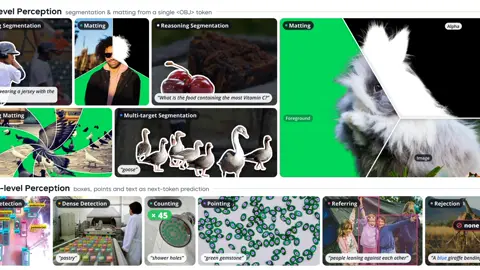
A vision-language model from Tencent's WeChat Vision team that handles detection, referring localization, counting, pointing, OCR, segmentation and alpha matting in one model. Built on Qwen3-VL, it writes coordinates as 1,001 dedicated tokens and adds a 9.6M-parameter pixel decoder for masks and mattes, with no SAM; it answers None when a target is absent. Training used about 100M images: three SFT stages, then mixed-task GRPO RL. The team reports leading 30+ benchmarks (self-reported), for example 55.3 F1 on LVIS against 50.7 for the best baseline. 2B and 4B weights are on Hugging Face under Apache 2.0, with a live demo.
Fibo 2.0 Dev
Bria AI · Image Gen + Edit
The next generation of Bria's FIBO image models, and the first to put image editing and text-to-image in one set of weights. It is an 8B-parameter flow-matching model in the FLUX.2 VAE latent space, with prompts encoded by Qwen3-VL-4B-Instruct, trained only on licensed data with structured JSON captions. It supports instruction, masked and multi-reference edits plus optional photographic style modes. Dev is the full non-distilled base for fine-tuning; a distilled Edit Turbo handles few-step editing. Bria reports first in image editing and second in text-to-image among open-weight models on the Artificial Analysis arena as of 20 October 2026. Weights are gated, non-commercial use only. Follows Fibo-1.5 covered in week 35.

Ideogram Vector
Ideogram · Vector Image Model
A new Ideogram model that outputs editable SVG vector artwork for logos, print designs, illustrations, labels and typography. It works from a text prompt (text to vector) or converts an existing image into vector shapes, and individual shapes and colours can be edited afterwards in a vector editor. API prices per SVG are $0.13 at low quality, $0.16 at medium and $0.20 at high, or $0.32 at high quality with reference images; image-to-vector costs $0.10 per image. It is available in the Ideogram app and through the API. The page gives no release date or benchmarks. Follows Ideogram 4.5 covered in week 41.
Video & Animation (5)
ATAS
Zhejiang University, Monash, UC Berkeley BAIR and Adelaide University · Agentic Video Generation
Moved from Week 43. The code release for Any Time, Any Space, a framework that keeps one persistent world state behind a multi-shot AI film. A compiler turns a screenplay into shot requests; scene memory holds static geometry in a shared frame and event memory indexes dynamic observations, so a place or moment can be re-filmed from a new angle. Each generated clip is reconstructed and registered, and changes the world only if review and state checks pass. The client needs no GPU; the geometry service, built on Pi3X and SAM 3, needs an NVIDIA GPU with about 20 GB free. MIT licence, 376 stars, arXiv 2610.20571.
CozyClay
NomaDamas (Doyun) · AI Video Previs
Open-source previs software that runs in a browser tab, made to plan shots before paying for AI video takes. Users block a set from primitives, add rigged characters, describe the action, an agent writes a motion spec that a deterministic compiler bakes and checks for collisions and foot slide, then lay out shots and camera rails. Exports include first and last frames, a greybox reference clip and a prompt for a video model, plus depth and normal passes and an OTIO cut list. It can be driven from an in-app agent panel, an MCP server or a CLI. Install is npx cozyclay with Node 22.19+, no GPU. AGPL-3.0, 1,005 stars.
FastH3 Omni
Hao AI Lab (FastVideo) with Nuva Lab · Video+Audio Model
A Hugging Face collection of FastH3 Omni checkpoints from the FastVideo team, built on MiniMax-H3. The model makes video with synchronized 32 kHz stereo audio at 24 fps from a text prompt plus up to nine images, three videos and three audio clips (twelve references at most), using eight transformer evaluations. Variants include BF16, FP8 (35B listed) and NVFP4 quantization-aware-distilled weights (14B listed), ComfyUI builds and an Apple Silicon MLX version, with local recipes for DGX Spark and RTX 5090 at 480p. The Comfy build shows about 154k downloads. Weights use the MiniMax-H3 Community License. Follows FastH3 Preview covered in week 35.
Hy-Nomas
Tencent Hunyuan · World Model
An 8B interactive video world model from Tencent Hunyuan that generates a world segment by segment, steered by free-form text instructions or camera control (keyboard or a trajectory). It carries prior video, instructions and camera motion forward so changes persist, and the site says it can generate up to 60 seconds of continuous 720p video in first-, second- or third-person views, with a draft mode for retrying a single segment. Code for training, inference, LoRA fine-tuning and an interactive demo is on GitHub under Apache 2.0, with weights on Hugging Face; the technical report is not out yet. Tencent notes spatial memory is weaker than Genie 3.
FastH3 Omni speed results
Hao AI Lab @ UCSD · Fast Video Model
An open-source distilled version of MiniMax H3 for reference-guided video with synchronised audio, released by the FastVideo team on 20 October. It takes a prompt plus images, video clips and a voice reference, and needs eight transformer evaluations instead of the base model's 50. Across 27 matched workloads on eight GB200 GPUs the team measured 5.6x to 11.9x lower end-to-end latency, for example a 15-second clip in 14.14 seconds versus 139.69. FastVideo UniServe reaches real-time speed on some 768p tasks, and NVFP4 QAD weights run on DGX Spark or RTX 5090, with ComfyUI support. Follows FastH3 Preview covered in week 35.
Audio & Speech (3)
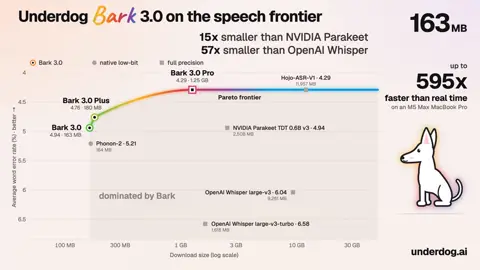
Underdog Bark 3.0
Underdog · Speech Recognition
An English speech-to-text model family that runs on-device in the Underdog Mac app for dictation and meeting notes, announced 15 October 2026. The base Bark 3.0 is a 163 MB download with a 4.94% average word error rate across the Open ASR Leaderboard's seven English sets (self-reported), matching NVIDIA Parakeet TDT 0.6B v3, which is 15 times larger. Bark 3.0 Plus (180 MB) scores 4.76%, Pro (1.25 GB) 4.29%, and Clean drops filler words. On an M5 Max it transcribes 5 minutes of audio in half a second. Built on Parakeet and Moondream's parakeet-ultra, released under CC-BY 4.0 on Hugging Face. No speaker labels yet.
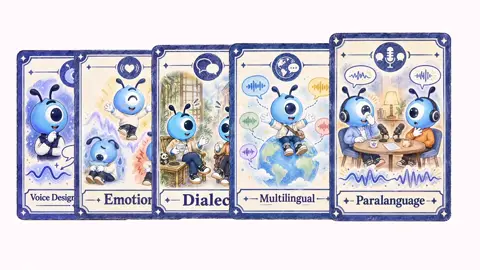
Ming-3.0-tts
Inclusion AI (Ant Group) · Open TTS
An open-weight text-to-speech family from Ant Group's Inclusion AI with voice design from a text description, voice cloning, director-style line instructions and inline tags for laughs, sighs and coughs. It speaks seven languages plus Sichuanese and Cantonese. Two models: a 0.5B dense model on Qwen2.5-0.5B, and a tiny MoE with 7.9B total and 1.3B active parameters that adds long-form podcast generation. On Artificial Analysis in October 2026, the 0.5B ranks first among open-weight models for Controlled Voice (1069 Elo) and ties first overall for pronunciation (93.2%). MIT licence; about 200 GitHub stars. Follows Ming-omni-tts-0.5B covered in week 8.
Dessa
Block · Speech-to-Speech Model
A full-duplex speech-to-speech conversation model from a small AI research lab at Block, founded by former members of the Toronto deep learning startup Dessa. It was trained from scratch only on recorded human conversation, with no text and no pretrained models, and listens and talks at the same time, including laughter, interruptions and backchannels. Block says it learned language from hundreds of times fewer words than LLMs, was trained on one NVIDIA GB200 NVL72, runs faster than real time and runs locally on a MacBook Pro M4 Max or better. There is a waitlist and a download, plus early access for AI safety researchers. No benchmarks are published.
3D & Spatial (4)
Hi3D 1.0 (formerly Sparc3D)
Hi3D (Oceano HK Holding) · Image-to-3D
Hi3D has open-sourced version 1.0 of its image-to-3D model, the renamed Sparc3D, released 23 October 2026. It refines a coarse mesh into high-resolution geometry conditioned on a reference image, using sparse latents and a self-pruning sparse VAE over up to three passes, reaching an effective 1536³ extraction grid. Training used about two million curated 3D assets. The release includes inference code, weights on Hugging Face, a technical report and a Hugging Face Space; training code is not included. It ships under the custom Hi3D Open License Agreement. The company's hosted v3.0 goes to 2048³ geometry and 8K textures.
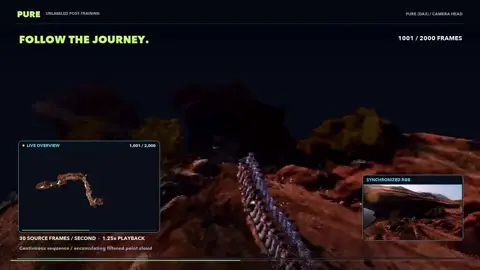
PURE
Peking University, HKUST, Pengcheng Laboratory · 3D Reconstruction
An ACM Multimedia 2026 paper that post-trains feed-forward 3D reconstruction models on unlabeled video to improve them on dynamic scenes, with no ground-truth 3D annotations. Training cues come from monocular depth, dynamic masks and cross-frame matches, covering depth ordering, local geometry and static consistency. It is applied to three backbones, Pi3, Depth Anything 3 and VGGT, and outputs depth, camera poses and colored point clouds from video or image sequences. The project shows a 2,000-frame reconstruction and offers code on GitHub, weights on Hugging Face and a PURE Studio demo Space.
JST-2
Viggle AI · World Model
Viggle's second-generation "physics-native" world foundation model, announced 19 October. JST (Joint Space-and-Time) represents a world as persistent 3D atoms, each with an xyz position plus learned attribute and dynamics vectors, decoded to images or 3D Gaussian splats. It builds a 3D scene in about one second on an NVIDIA B200 for under $0.01, takes up to 64 input views, and generates animation-ready characters and full-body motion from text or video. In blind human tests Viggle reports wins over Meshy 7.1, Tripo H3.1, Cartwheel and DeepMotion (self-reported). It is free to try in PINOC and available by API and MCP; JST-3 with learned physics is in development.
SKY-001
Skyfall AI · Engineering World Model
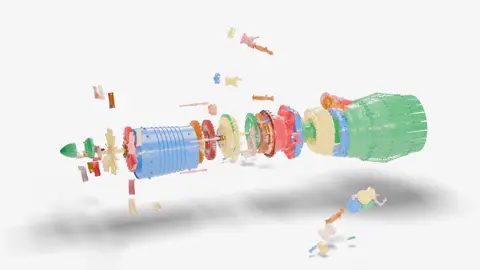
A spatial world model for engineering design from Skyfall AI, posted 19 October. A Hierarchical Composer splits a design into assemblies and parts, then a Construction World Model predicts the visual sequence that builds each one. It is shown on CAD (image to part tree and build steps) and BIM (building outline to floor plan). Training used over 200,000 parts, 600,000 construction examples and about 35,000 floor plans. Skyfall reports 79.7% IoU on its 1,000-case CAD benchmark in 3.9 seconds and $0.005 per case, against 79.1% for GPT-6 Astra at 199 seconds and $0.75, and 43.6% IoU on BIM (all self-reported). No weights or access details are given.
Agents & Automation (4)
Herk Edit Kit
Nate Herk · Video Editing Skills
A video-editing kit for Codex and Claude Code, built on HyperFrames and formerly called the HyperFrames Student Kit. It ships 15 skills mirrored for both assistants, 406 draft motion-graphics cards in two styles, two scene templates and an editing playbook. The tools cover transcription, silence cutting, mistake detection, transcript retiming, EDL review, beat-sync checks and short-form reels with hooks, captions and B-roll. The author uses ElevenLabs Scribe for transcripts and Kie.ai for generated assets, but Whisper works too and the starter demo needs no API key. It requires Node.js 22+, FFmpeg and Chrome. 2,146 stars; licence listed as other. Follows scroll-craft by the same author in week 43.
OpenFilm
OpenFilm · Video Agent
An open-source AI video agent that lets Claude Code, Codex or another coding agent make films as web pages, then edit them in Studio, a local browser editor. A film is one film.html of tracks; each shot is a page that draws any moment through a single frame(t) function, using three.js, canvas, SVG, CSS, GSAP or video. Studio edits text, layers and timeline clips and exports MP4, GIF, stems, subtitles or Final Cut, Premiere and Resolve timelines. Needs Node 22.2+ and ffmpeg; generated voice, music and images use your own provider keys. MIT licence, about 2,630 GitHub stars; the repo was created 4 October 2026.

Claude Duet
Anthropic · Proactive Agent App
A new Anthropic app, opened as a research preview on 21 October, in which Claude acts as a proactive agent built around Claude Opus 5.5. It sends a morning brief, checks connected apps every few hours, messages you when something needs attention and works on tasks in its own virtual machine and browser. It asks for approval before sending messages, paying, signing or deleting, and refuses some actions such as trading securities. A new classifier guards against leaking card numbers and ID data. It runs on iOS, Android and claude.ai, can use over 6,000 Marketplace connectors, and is included in Pro and Max plans by waitlist, starting in the US.
Sage-A1.5
InternScience (Shanghai AI Lab) · Open-Weight Agent Model
A 35B mixture-of-experts agentic model from Shanghai AI Laboratory, built on Qwen3.6-35B-A3B and Agents-A1, with a 256K served context. It adds agentic orchestration (parallel subagents with separate contexts) and an opt-in verification mode where the model reviews its own progress mid-run. Weights are on Hugging Face under Apache 2.0 (uploaded 15 October), with FP8 and GGUF versions, and it serves through SGLang or vLLM. The team reports 81.7 on BrowseComp, 61.2 on SWE-bench Pro, 81.6 on IFBench and 92.0 on XBench-DS-2510, and a 17.6-point SWE-bench Pro gain over A1 (self-reported). Follows Agents-A1 covered in week 27.
Developer Tools (3)
Free Claude Code
Ali Shahryar (Alishahryar1) · Coding Agent Proxy
Since Week 30 2026: the proxy now lists 61 providers and 11 coding agents, adding Cline, Hermes, DeepSeek Harness, Grok Build, Muse Code, Aider and VS Code Chat (v6.4). Releases since late September added custom API providers, Anthropic, Alibaba Cloud, xKiro, Opper and Atlas Cloud providers, continuing an interrupted response on the next fallback model (v6.10), bundled RTK and Headroom token compression (v6.13), and several API keys per provider (v6.15). The README also adds native Codex sessions in the browser. It reached v6.16.27 on 25 October, has 63,193 stars, and its licence badge now reads AGPL v3.
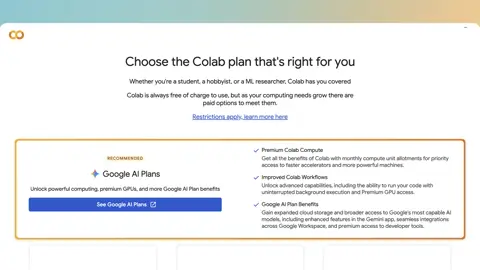
Colab in Google AI plans
Google · Cloud Notebooks
Google announced on 22 September that Google AI subscribers now get premium Google Colab benefits, including priority access to faster accelerators and more powerful machines. Google AI Ultra subscribers also get uninterrupted background execution and Premium GPU access, so long training runs can finish without an open browser tab. Existing Colab subscriptions are unchanged, and the two sets of benefits stack. The plans also bundle cloud storage, Gemini app features, Workspace integrations and premium access to Google Antigravity and Google AI Studio. The rollout runs over several weeks in countries where Colab is supported. No prices or GPU quotas are given in the post.
DeepInfer
DeepSeek · Inference Engine
DeepSeek open-sourced the inference framework behind its production services, created 16 October under Apache 2.0. This release does offline inference for DeepSeek-V4.1-Flash on NVIDIA SM100 GPUs and Huawei Ascend 950 NPUs, using FlashMLA, DeepGEMM, DeepEP and TileLang kernels, attention data parallelism, MoE expert parallelism with EPLB, DSpark draft-token decoding, batch-invariant and deterministic sampling, and structured outputs. A KV cache system, prefill/decode disaggregation and load balancing are not included. Throughput charts were measured on 4 SM100 GPUs for prefill and 64 for decode. It was originally built on vLLM. 21,937 stars.
Published by Quanta AI Labs, an AI agency in India. Browse every week in AI News Weekly.